

About This Episode
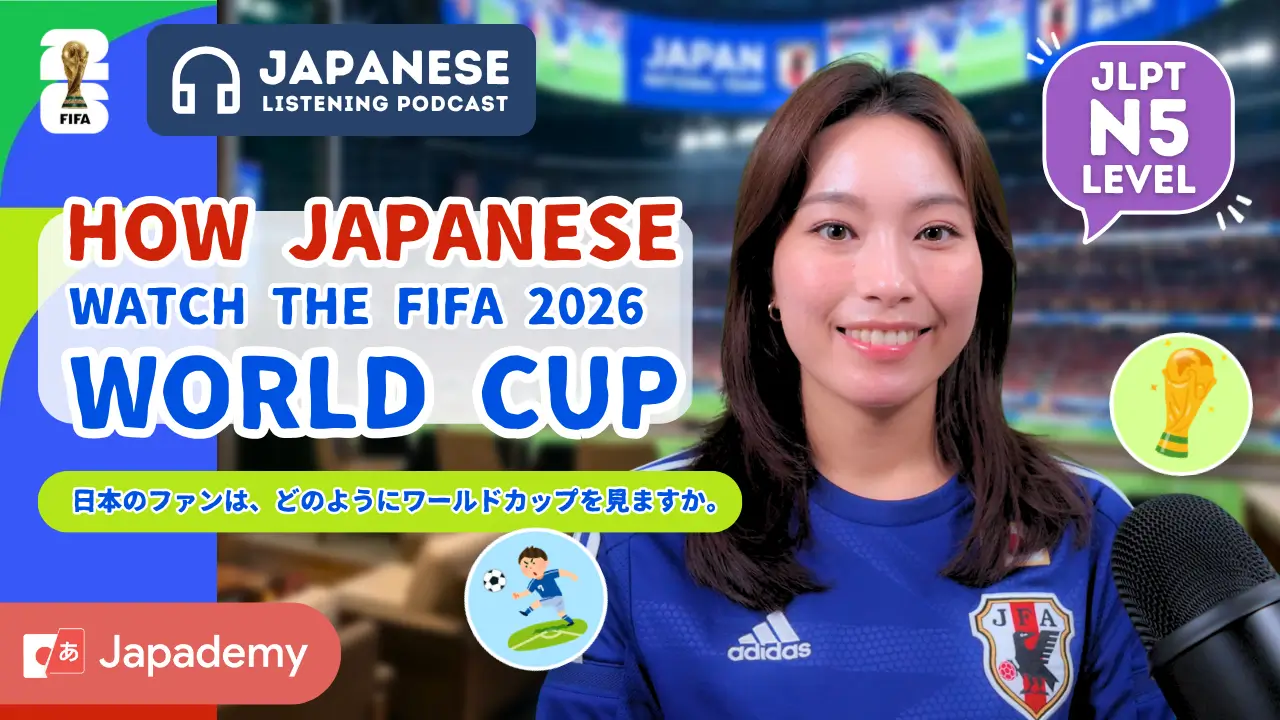
How do Japanese fans watch the 2026 FIFA World Cup? In this JLPT N5 listening episode, I talk about public viewing events, izakaya gatherings, the famous post-match clean-up, and Japan's national team -- the Samurai Blue. I also share what it must have felt like to host the 2002 World Cup right here in Japan. Great practice if you are aiming for JLPT N5!
Episode Details
Key Vocabulary
Here are the key words and phrases you will hear in this episode.
Grammar Points Covered
〜ながら — doing two things at the same time
Attach ながら to the stem of a verb to mean 'while doing X'. Used when two actions happen simultaneously.
Example: たべながら、のみながら、いっしょに おうえんします。
Eating, drinking, cheering together — it's the best atmosphere.
〜と — automatic/natural result
Use 〜と to express that whenever X happens, Y naturally follows. Common for facts and habits.
Example: にほんが てんを いれると、いざかやが おおさわぎに なります!
When Japan scores, the whole izakaya erupts!
〜たり〜たりします — listing representative actions
Used to list two or more representative actions from a larger group. Conveys 'doing things like X and Y'.
Example: おおきな こえで うたったり、おどったり します。
They sing, they dance — the celebrations are incredible.
Episode Transcript
Follow along while you listen. Japanese script first, then the English translation below.
Japanese (日本語)
みなさん、こんにちは!かなみです。 きょうは、ワールドカップと にほんじんの ファンについて おはなしします。 いま、ワールドカップが はじまっています!
にほんじゅうで、たくさんの ひと(人)が みています。 みなさんも、みていますか? では、にほんじんは どのように ワールドカップを みるのでしょうか?
まず、パブリックビューイングがあります。 パブリックビューイングは、おおきな スクリーンで しあい(試合)を みるイベントです。 こうえん(公園)や ひろい ばしょで、たくさんの ひと(人)が あつまります。
にほん(日本)が かつと、みんなで おおきな こえで おうえんします。 とても にぎやかで、たのしいですよ! つぎは、いざかやです。 いざかやは、にほんの のみや(飲み屋)です。
ともだちと いざかやに いって、しあい(試合)を みる ひと(人)も たくさんいます。 たべながら、のみながら、いっしょに おうえんします。 にほんが てんを いれると、いざかやが おおさわぎに なります!
もちろん、いえ(家)で みる ひと(人)も たくさんいます。 かぞくや ともだちと いっしょに、いえ(家)で おうえんします。 わたしの まわりでも、みんな ワールドカップの はなしを しています。
ワールドカップの きせつは、にほんじゅうが こうふんしますね。 つぎは、ユニフォームの はなしです。 ワールドカップの きせつに なると、サムライブルーの ユニフォームを きる ひと(人)が ふえます。
でんしゃ(電車)の なかで、ユニフォームを きている ひと(人)を よく みます。 まちの なかでも、みせの なかでも みかけます。 ユニフォームを きることは、にほんチームへの ほこり(誇り)を あらわしています。
'サムライブルー' というのは、にほんだいひょうチームの ニックネームです。 あおい ユニフォームと、さむらいの こころから きています。 とても かっこいい ニックネームですね!
つぎは、しあい(試合)の あとの はなしです。 にほんが かつと、ファンは とても よろこびます。 おおきな こえで うたったり、おどったり します。
でも、それだけでは ありません。 にほんじんの ファンは、スタジアムの ゴミを ひろうことで ゆうめい(有名)です。 しあい(試合)の あとで、 じぶんたちの まわりの ゴミを ひろいます。
これは、せかいじゅうで ニュースに なりました。 こうふんしながらも、まわりを きれいに する。 それが、にほんじんらしい こころだと おもいます。
にほんじんは、ひとに めいわくを かけないことを たいせつに します。 それは、スポーツの げんばでも おなじです。 すばらしいですね。 つぎは、サムライブルーの はなしです。
にほん(日本)が ワールドカップに はじめて でたのは、1998ねんです。 それから、ずっと でつづけています。 すごいですね!
にほんは、ワールドカップで なんかい(何回)も いい けっかを だしました。 2002ねんには、ベスト16(じゅうろく)まで すすみました。 2022ねんの カタール ワールドカップでは、ドイツと スペインに かちました。
にほんじゅうが おどろいて、よろこびました! このワールドカップでも、にほんは つよい チームです。 せんしゅ(選手)たちは、よく れんしゅう(練習)しています。
にほんじゅうが、がんばってほしいと おもっています。 でも、かなしいことも あります。 よい せんしゅ(選手)の なかに、けが(怪我)で でられなかった ひと(人)が います。
ファンは、とても かなしんでいます。 けが(怪我)を した せんしゅ(選手)たちを、 みんな おうえんしています。 けが(怪我)が はやく なおって、 また ピッチに かえってきてほしいです。
でも、のこった せんしゅ(選手)たちも、 ほんとうに がんばっています。 みんなで おうえんしましょう! さて、2002ねんの ワールドカップについて はなしましょう。
2002ねんに、にほんと かんこくが いっしょに ワールドカップを かいさい(開催)しました。 アジアで はじめての ワールドカップでした。 わたしは そのとき まだ ちいさかったので、おぼえていません。
でも、そのころの にほんじんが どんな きもちだったか、 そうぞうできます。 じぶんの くにで、ワールドカップが かいさい(開催)されるなんて、すごいことですよね。 にほんじゅうが ほこり(誇り)と よろこびで いっぱいだったと おもいます。
まちじゅうが にぎやかで、みんな こうふんしていたと おもいます。 2002ねんは、にほんの サッカー れきし(歴史)の なかで、 とくべつな とし(年)です。 では、れんしゅう(練習)の じかん(時間)です!
にほんご(日本語)で こたえてみてください。 しつもんです:みなさんは どのように ワールドカップを みていますか? いえで ひとりで みていますか?
ともだちと みていますか? そして:にほんチームを おうえんしていますか? コメントで おしえてください!
たとえば:'いざかやで ともだちと みています。 にほんを おうえんしています! ' どんな こたえでも いいです。 がんばってください!
きょうは、にほんじんの ファンと ワールドカップについて おはなししました。 どのくらい わかりましたか? もっと にほんご(日本語)が うまくなりたいですか?
リスニングの れんしゅう(練習)は とても たいせつ(大切)です。 でも、せんせい(先生)と いっしょに べんきょうすることも、たいせつ(大切)です。 わたしは、ジャパデミーで にほんご(日本語)を おしえています。
クラスは ちいさいです。 さいだい はちにん(八人)です。 94パーセントの がくせい(学生)が、 コースを さいごまで おえています。 したの リンクを みてください。 むりょうの たいけんレッスンも ありますよ。
クラスで おあいできることを たのしみにしています! また つぎの どうが(動画)で おあいしましょう。 ありがとうございました! Thank you for listening.
English Translation
Hey everyone! I'm Kanami. Today, let's talk about the World Cup and how Japanese fans experience it. The World Cup has started!
All across Japan, people are watching. Are you watching too? So — how do Japanese fans actually watch the World Cup?
First — there are public viewing events. A public viewing event is where you watch the match on a big screen together with lots of people. People gather in parks and open spaces to watch together.
When Japan wins, everyone cheers together at the top of their voices. It's so lively and so much fun! Then there are izakayas. An izakaya is a Japanese pub or casual bar.
Lots of people go to an izakaya with friends to watch the game. Eating, drinking, cheering together — it's the best atmosphere. When Japan scores, the whole izakaya erupts!
Of course, plenty of people watch at home too. Gathered with family or friends, cheering together at home. Even around me, everyone has been talking about the World Cup.
World Cup season really does get all of Japan excited. Now, let's talk about jerseys. As World Cup season arrives, more and more people start wearing the Samurai Blue jersey.
On the train, you often see people wearing the jersey. You spot them in the streets, in shops, everywhere. Wearing the jersey is a way of showing pride in the Japanese team.
'Samurai Blue' is the nickname for the Japanese national football team. It comes from the team's blue uniform and the spirit of the samurai. It's a really cool nickname, right?
Now, let's talk about what happens after a match. When Japan wins, the fans are overjoyed. They sing, they dance — the celebrations are incredible.
But there's something else too. Japanese fans are famous for cleaning up the stadium after the match. After the game, they pick up all the rubbish around them.
This made news all around the world. Excited and celebrating, yet still tidying up around them. I think that spirit is very typically Japanese. Japanese people really value not causing trouble or inconvenience to others. And that shows up even at sporting events.
It's genuinely admirable. Now, let's talk about the Samurai Blue themselves. Japan first qualified for the World Cup back in 1998. And they've qualified for every tournament since.
That's impressive! Japan has produced some great results at the World Cup over the years. In 2002, they made it all the way to the Round of 16. At the 2022 Qatar World Cup, they beat Germany and Spain.
All of Japan was shocked — and absolutely delighted! This time around, Japan are a strong team again. The players have been training hard.
All of Japan is hoping they'll give it everything they've got. But there's something sad to mention too. Among Japan's best players, some couldn't join the tournament due to injury.
Fans have been really heartbroken about it. Everyone is sending support and warm wishes to the injured players. I hope they recover quickly and return to the pitch soon.
But the players who are there are genuinely giving it their all. Let's all cheer them on together! Now, let me talk about the 2002 World Cup.
In 2002, Japan and South Korea co-hosted the World Cup. It was the first World Cup ever held in Asia. I was very young at the time, so I have no memory of it.
But I can imagine how Japanese people must have felt back then. Having the World Cup held in your own country — that's something extraordinary. I think all of Japan must have been full of pride and joy.
The streets must have been buzzing, everyone excited. 2002 is a very special year in the history of Japanese soccer. Alright — practice time! Try answering in Japanese.
Here's the question: how are you watching the World Cup? Are you watching alone at home? Or with friends? And: are you cheering for Japan?
Let me know in the comments! For example — 'I'm watching at an izakaya with friends. I'm cheering for Japan!' Any answer is wonderful. Do your best!
Today we talked about Japanese fans and the World Cup. How much did you understand? Do you want to get better at Japanese?
Listening practice is so important — but studying with a real teacher makes a huge difference too. I teach Japanese at Japademy. Our classes are small — max 8 students. 94% of our students complete their course all the way to the end.
Check the link below — there's a free trial lesson too. I'd genuinely love to meet you in class one day. See you in the next video. Thank you so much for watching!
Thank you for listening.
Frequently Asked Questions
Who is this episode for?
This episode is for learners at JLPT N5 level -- typically students who have completed a few months to a year of structured Japanese study. It is ideal if you have finished Minna no Nihongo Book I or are working through Japademy's Pre-Intermediate or Intermediate courses. Speech is slow and clear, with full English subtitles throughout.
What is this episode about?
Kanami talks about how Japanese fans watch the 2026 FIFA World Cup -- from public viewing events and izakaya gatherings, to wearing the Samurai Blue jersey and the famous post-match stadium clean-up. She also shares what it must have felt like when Japan co-hosted the 2002 World Cup with South Korea.
What vocabulary will I hear?
Key words in this episode include: パブリックビューイング (public viewing event), 居酒屋 izakaya (Japanese pub), 応援する ouen suru (to cheer), 誇り hokori (pride), and 怪我 kega (injury). You will also hear the nickname サムライブルー (Samurai Blue) used naturally throughout.
How do I get the full transcript?
Subscribe to our free newsletter at japademy.com/japanese-listening-practice and we will send you the full PDF transcript for this episode, plus new episodes as they are released.
How can I keep improving my Japanese?
Listening practice is a great foundation, but working with a live teacher makes a huge difference. At Japademy, Kanami Sensei teaches small classes of max 8 students, with certified native teachers and a structured path from Beginner to JLPT ready. There is a free trial lesson -- check the link below or visit japademy.com/jlpt-online-courses.
JLPT preparation online courses
Prepare for the JLPT with certified native teachers and proven exam strategy.