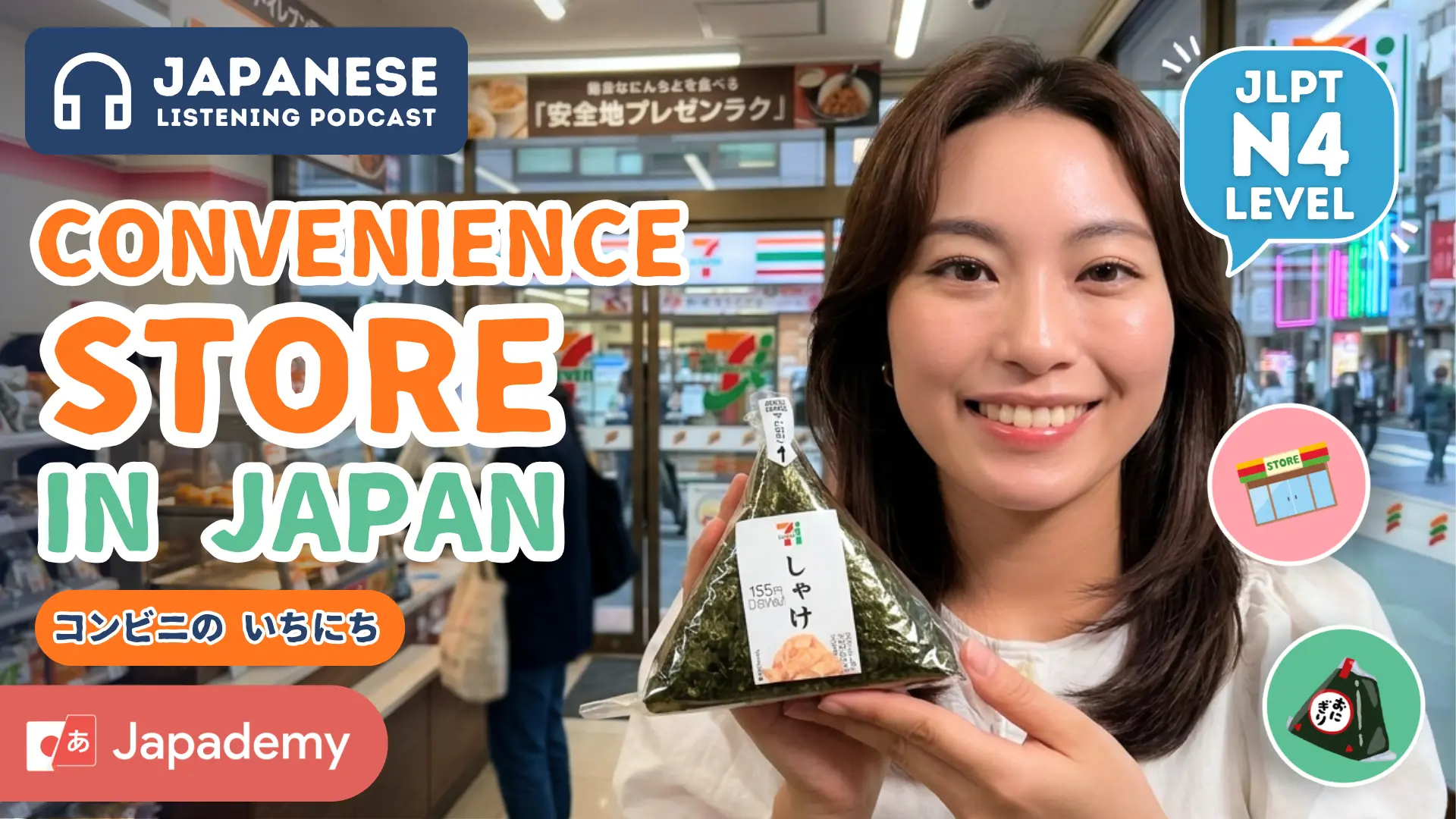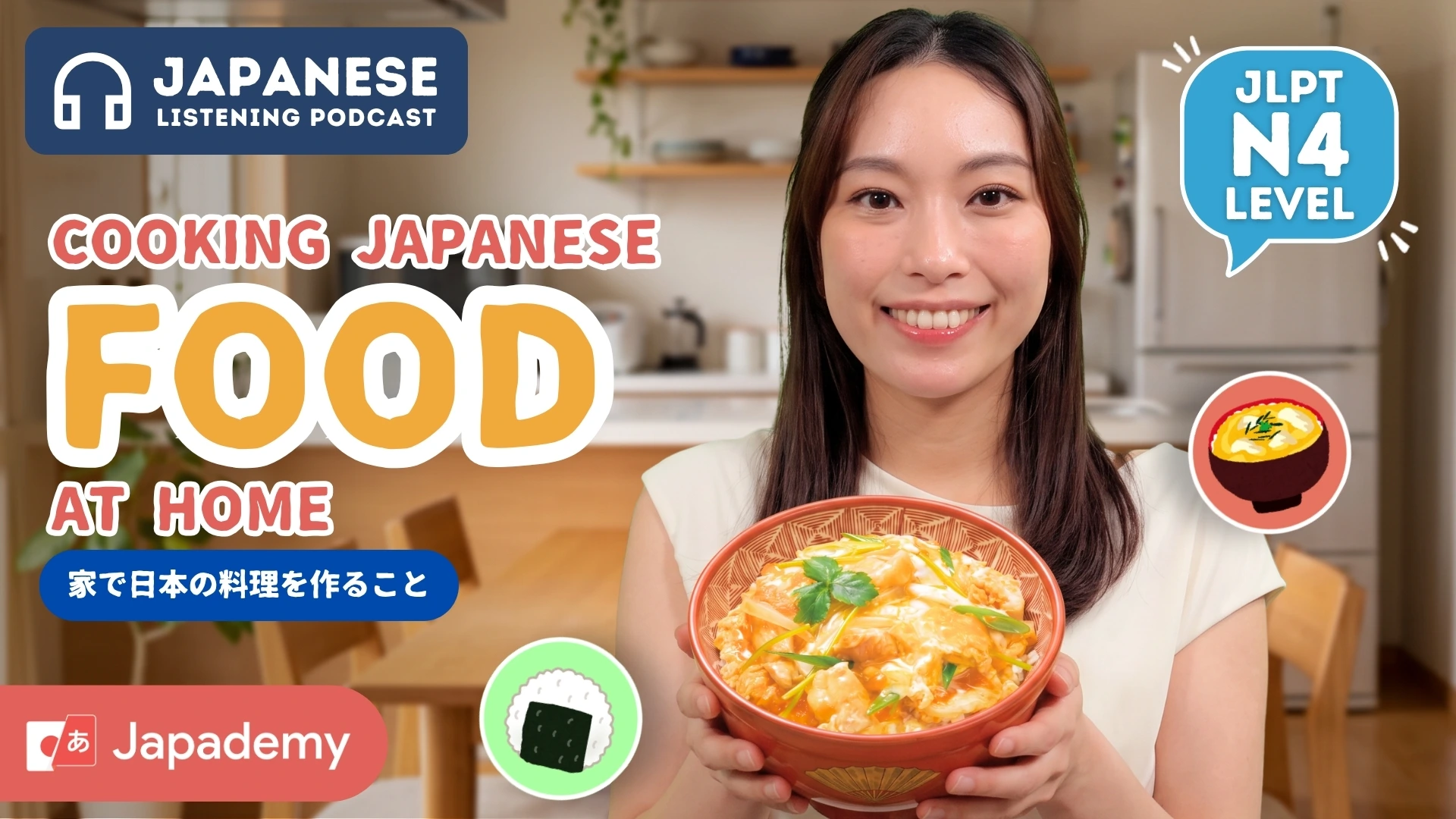


About This Episode
Ever wonder what a Japanese teacher actually cooks at home? In this episode I walk you through the dishes I make most often, from my all-time favourite oyakodon to a quick miso soup and onigiri, and why Japanese home cooking is honestly easier than it looks. I also share what happened when I started cooking for my Colombian husband -- the half-cooked egg in oyakodon really threw him at first! It's all at natural N4 speed with full English subtitles.
Episode Details
Key Vocabulary
Here are the key words and phrases you will hear in this episode.
Grammar Points Covered
Using 〜ようになりました to describe a change over time
Use 〜ようになりました to say you have started doing something, or reached a state that was not true before.
Example: 最近(さいきん)は、以前(いぜん)よりずっと家(いえ)で料理(りょうり)をするようになりました。
Lately, I have started cooking at home so much more than I used to.
Using 〜わけではありません to soften a statement
Add 〜わけではありません to say something is not entirely or always the case.
Example: 私(わたし)は毎日(まいにち)伝統的(でんとうてき)な日本料理(にほんりょうり)を作(つく)るわけではありません。
It is not that I make traditional Japanese food every single day.
Using 〜やすい to say something is easy to do
Attach 〜やすい to a verb stem to say an action is easy or simple to do.
Example: 料理(りょうり)が苦手(にがて)な方(かた)でも、作(つく)りやすい料理(りょうり)だと思(おも)いますよ。
Even if cooking is not your strong point, I think it is an easy dish to make.
Episode Transcript
Follow along while you listen. Japanese script first, then the English translation below.
Japanese (日本語)
日本料理(にほんりょうり)を家(いえ)で作(つく)るのは、難(むずか)しいと思(おも)いますか? 実(じつ)は、簡単(かんたん)に作(つく)れる料理(りょうり)もたくさんあります。 今日(きょう)は、私(わたし)が家(いえ)でよく作(つく)る 日本料理(にほんりょうり)についてお話(はなし)します。 これはJLPT N4レベルの日本語(にほんご)です。
ゆっくり聞(き)いてみてください。では、始(はじ)めましょう! 私(わたし)は毎日(まいにち)伝統的(でんとうてき)な日本料理(にほんりょうり)を 作(つく)るわけではありません。 でも、シンプルで健康(けんこう)的(てき)な料理(りょうり)を 作(つく)ることが大好(だいす)きです。 忙(いそが)しい日(ひ)でも、サッと作(つく)れる料理(りょうり)を 選(えら)ぶようにしています。
最近(さいきん)は、以前(いぜん)よりずっと家(いえ)で 料理(りょうり)をするようになりました。 妊娠(にんしん)してから、できるだけバランスの良(よ)い食事(しょくじ)を 心(こころ)がけるようにしているんです。 野菜(やさい)や魚(さかな)、ご飯(はん)を中心(ちゅうしん)に、 毎日(まいにち)の食事(しょくじ)を考(かんが)えています。 皆(みな)さんは、家(いえ)でよく料理(りょうり)をしますか?
では、私(わたし)が一番(いちばん)好(す)きな家庭料理(かていりょうり)を 紹介(しょうかい)しましょう。 それは、親子丼(おやこどん)です! 親子丼(おやこどん)は、鶏肉(とりにく)と卵(たまご)を使(つか)った 丼(どんぶり)料理(りょうり)です。 「親子(おやこ)」というのは 「親(おや)と子(こ)」という意味(いみ)です。
鶏肉(とりにく)が「親(おや)」で、卵(たまご)が「子(こ)」ということですね。 材料(ざいりょう)は、鶏肉(とりにく)、卵(たまご)、玉(たま)ねぎ、醤油(しょうゆ)、 みりん、だし汁(だしじる)だけです。 食材(しょくざい)が少(すく)ないので、 スーパーで全部(ぜんぶ)そろえることができます。 玉(たま)ねぎをだし汁(だしじる)で煮(に)て、鶏肉(とりにく)を加(くわ)えて、 最後(さいご)に卵(たまご)でとじます。
忙(いそが)しい日(ひ)でも、30分(ぷん)ぐらいで作(つく)れます。 料理(りょうり)が苦手(にがて)な方(かた)でも、 作(つく)りやすい料理(りょうり)だと思(おも)いますよ。 食(た)べると、とても温(あたた)かくて、 ほっとした気持(きも)ちになります。 ぜひ一度(いちど)試(ため)してみてください!きっと好(す)きになりますよ。
先(さき)ほどもお話(はなし)しましたが、 妊娠(にんしん)してから料理(りょうり)の習慣(しゅうかん)が ずいぶん変(か)わりました。 妊娠(にんしん)前(まえ)は、外食(がいしょく)することも多(おお)かったんです。 でも今(いま)は、赤(あか)ちゃんのために できるだけ家(いえ)でご飯(はん)を作(つく)ることにしました。 体(からだ)のためにも、 食(た)べるものに気(き)をつけるようになりました。
特(とく)に、野菜(やさい)と魚(さかな)を よく食(た)べるようにしました。 魚(さかな)料理(りょうり)の中(なか)では、 焼(や)き魚(ざかな)をよく作(つく)ります。 塩(しお)を少(すこ)し振(ふ)って焼(や)くだけで、 とても美味(おい)しくなります。 シンプルなのに、体(からだ)にいいし、 赤(あか)ちゃんにも良(よ)いと聞(き)いています。
みそ汁(みそしる)も、毎日(まいにち)作(つく)るようにしています。 みそ汁(みそしる)には豆腐(とうふ)やわかめ、 季節(きせつ)の野菜(やさい)を入(い)れます。 作(つく)るのに5分(ふん)もかかりません。 体(からだ)が温(あたた)まるし、心(こころ)も落(お)ち着(つ)きます。 料理(りょうり)が生活(せいかつ)の一部(いちぶ)になってきて、 以前(いぜん)よりずっと楽(たの)しくなってきました。
次(つぎ)に、日本料理(にほんりょうり)の中(なか)で 特(とく)に作(つく)りやすい料理(りょうり)を紹介(しょうかい)します。 まず、カレーライスです。 カレーライスは、日本人(にほんじん)にとって 定番(ていばん)の家庭料理(かていりょうり)です。 肉(にく)と野菜(やさい)を炒(いた)めて、 カレールーを入(い)れるだけで完成(かんせい)します。
料理(りょうり)を始(はじ)めたばかりの人(ひと)にも、 安心(あんしん)しておすすめできます。 次(つぎ)は、おにぎりです。 ご飯(はん)を三角形(さんかくけい)に握(にぎ)って、 海苔(のり)を巻(ま)いて作(つく)ります。 中(なか)に入(い)れる具(ぐ)材(ざい)は、梅干(うめぼ)し、ツナマヨ、鮭(さけ)など、 好(す)きなものでいいです。
私(わたし)は梅干(うめぼ)しが一番(いちばん)好(す)きです。 ポイントは、ご飯(はん)に少(すこ)し塩(しお)を混(ま)ぜることです。 最初(さいしょ)はうまく三角形(さんかくけい)に作(つく)れなくて、 困(こま)ったことがあります。 でも、何度(なんど)も作(つく)るうちに、 うまく作(つく)れるようになりますよ。
料理(りょうり)は失敗(しっぱい)しながら上手(じょうず)になるものですから。 さて、ここで少(すこ)し夫(おっと)の話(はなし)をしてもいいですか? 私(わたし)の夫(おっと)はコロンビア人(じん)です。 日本料理(にほんりょうり)に慣(な)れていなかったので、 最初(さいしょ)はいろいろ驚(おどろ)いていました。
特(とく)に、親子丼(おやこどん)の半熟(はんじゅく)の卵(たまご)には、 とても戸惑(とまど)っていました。 コロンビアでは、そういう食(た)べ方(かた)はあまりしないそうです。 でも今(いま)は、すっかり好(す)きになってくれていますよ! 時々(ときどき)、夫(おっと)の口(くち)に合(あ)うように、 味付(あじつ)けを変(か)えることがあります。
例(たと)えば、カレーは少(すこ)しスパイシーにしたり、 味(あじ)を濃(こ)くしたりします。 日本(にほん)と南米(なんべい)では、 好(この)まれる味(あじ)がだいぶ違(ちが)いますからね。 でも、そういう工夫(くふう)をするのが楽(たの)しいんです。 二人(ふたり)で「これ、おいしい!」って言(い)えた時(とき)が、 一番(いちばん)うれしいです。
最近(さいきん)は、夫(おっと)もみそ汁(みそしる)が大好(だいす)きになりました。 日本料理(にほんりょうり)で大切(たいせつ)な人(ひと)を喜(よろこ)ばせることができたら、 とてもうれしいですよね。 さて、ここで皆(みな)さんに練習(れんしゅう)をしてもらいましょう。 今日(きょう)は、〜ようになりました、という表現(ひょうげん)を 練習(れんしゅう)しましょう。
例(たと)えば、「私(わたし)はみそ汁(みそしる)を毎日(まいにち)作(つく)るようになりました。」 皆(みな)さんは、最近(さいきん)どんなことをするようになりましたか? 日本語(にほんご)の勉強(べんきょう)でも、料理(りょうり)でも、 なんでもいいです。 コメント欄(らん)に書(か)いてくれたら、とてもうれしいです!
今日(きょう)は、日本(にほん)の家庭料理(かていりょうり)についてお話(はなし)しました。 よく聞(き)けましたか? こういう練習(れんしゅう)を続(つづ)けることはとても大切(たいせつ)です。 でも、聞(き)くだけでは限界(げんかい)がありますよね。 日本語(にほんご)を本当(ほんとう)に話(はな)せるようになりたいなら、 実際(じっさい)に話(はな)す練習(れんしゅう)が必要(ひつよう)です。 私(わたし)はジャパデミーで教(おし)えています。 1クラス最大(さいだい)8人(にん)の少人数(しょうにんずう)クラスです。
先生(せんせい)が皆(みな)さんの名前(なまえ)を覚(おぼ)えて、 一人(ひとり)ひとりに合(あ)った指導(しどう)をします。 興味(きょうみ)があれば、説明欄(せつめいらん)のリンクから 無料(むりょう)体験(たいけん)レッスンを受(う)けてみてください。 ぜひ一緒(いっしょ)に勉強(べんきょう)しましょう!お待(ま)ちしています。 また次(つぎ)の動画(どうが)でお会(あ)いしましょう。ありがとうございました!
English Translation
Hi everyone! Do you think cooking Japanese food at home is hard? Honestly, there are plenty of dishes that are really easy to make. Today I'm going to share the Japanese dishes I make at home most often. This is JLPT N4 level Japanese. Take your time listening carefully. Let's get started!
I don't make traditional Japanese food every single day. But I really do love making simple, healthy meals. Even on busy days, I try to pick something I can put together quickly. Lately, I've been cooking at home so much more than I used to. Since becoming pregnant, I've been making a real effort to eat well.
I plan every day's meals around vegetables, fish, and rice. Do you cook at home often? Let me tell you about my absolute favourite home-cooked dish. It's oyakodon! Oyakodon is a rice bowl dish made with chicken and egg.
The word 'oyako' literally means 'parent and child.' The chicken is the 'parent' and the egg is the 'child.' Clever, right? The ingredients are just chicken, egg, onion, soy sauce, mirin, and dashi stock. There are so few ingredients that you can pick everything up in one supermarket trip. You simmer the onion in dashi, add the chicken, then finish it off with egg.
Even on a busy day, it comes together in about 30 minutes. I genuinely think it's manageable even if cooking isn't your strong point. When you eat it, it's so warm and comforting -- like a hug in a bowl. Give it a try sometime -- I'm pretty sure you'll love it. As I mentioned, my cooking habits have really changed since I got pregnant. Before getting pregnant, I'd eat out quite a bit.
But now I've decided to cook at home as much as possible -- for the baby. I've also become much more careful about what I eat, for my own body too. I've especially started eating a lot more vegetables and fish. Of all the fish dishes, grilled fish is what I make most often. Just a sprinkle of salt and a quick grill -- it's honestly so good.
So simple, but it's good for my body -- and apparently good for the baby too. I also make miso soup every day now. I put in tofu, wakame seaweed, and whatever vegetables are in season. It takes less than five minutes. It warms you right up -- and genuinely calms you down. Cooking has become part of my daily life, and I enjoy it so much more than I used to.
Next, let me share some Japanese dishes that are surprisingly easy to make at home. First up -- curry rice. Curry rice is an absolute staple in Japanese homes. You fry the meat and vegetables, add the curry roux -- and you're done. It's something I'd confidently recommend even to people who've just started cooking.
Next -- onigiri, Japanese rice balls. You shape rice into a triangle and wrap it in nori seaweed. For the filling, you can use umeboshi plum, tuna mayo, salmon -- whatever you like. Personally, umeboshi is my favourite. The key is to mix a little salt into the rice before shaping it. Honestly, the first time I tried, I couldn't get the triangle shape right at all. But the more you make them, the better you get. Really.
Cooking is just one of those things you learn through your mistakes. Now, can I tell you a little story about my husband? My husband is Colombian. He wasn't used to Japanese food at all, so in the beginning a lot of things surprised him.
Especially the half-cooked egg in oyakodon -- that really threw him. Apparently, eating eggs that way just isn't done in Colombia. These days though -- he absolutely loves it! I do sometimes adjust the seasoning to suit his taste.
Like making the curry a bit spicier, or richer in flavor. Japanese and South American flavor profiles are pretty different, after all. But I honestly enjoy figuring that balance out. The moment when we both say 'This is so good!' -- that's honestly the best feeling.
Recently, he's actually become a huge fan of miso soup. There's something really special about making the people you love happy with Japanese food. Alright, let's do a little practice together. Today let's practice the expression '〜you ni narimashita' -- 'I've started doing / I've come to do something.' For example -- 'I've started making miso soup every day.'
What have you started doing recently? It can be anything -- studying Japanese, cooking, a new habit. Anything at all. I'd love it if you shared your answer in the comments! Today we talked about Japanese home cooking. How much did you catch?
Keeping up with listening practice like this really matters. But listening alone has its limits. If you really want to speak Japanese, you need actual speaking practice too. I teach at Japademy -- classes are small, with a maximum of 8 students per class. Your teacher knows your name and your weak points, and teaches you as an individual.
If you're curious, check the link in the description for a free trial lesson. I'd love to study with you. I'll be waiting! See you in the next video. Thank you so much for watching! Thank you for listening. If you want to learn Japanese with the help of native Japanese teachers, please visit japademy.com. Otherwise, keep practicing your Japanese listening skills with our podcast.
See you next time. またね。
Frequently Asked Questions
Who is this Japanese listening episode for?
This one is aimed at JLPT N4 learners and intermediate students, roughly anyone comfortable with N5 grammar and building toward N4. If you can follow everyday Japanese but still rely on subtitles, this is a great fit. It pairs well with the intermediate stage of a Japademy course.
What is this episode about?
Kanami Sensei talks about Japanese home cooking. She shares the dishes she makes most often, including oyakodon, grilled fish, miso soup, curry rice, and onigiri, plus how her cooking changed during pregnancy and what happened when she started cooking for her Colombian husband.
What vocabulary will I hear?
You will pick up useful N4 cooking words like 親子丼(おやこどん)(a chicken and egg rice bowl), 家庭料理(かていりょうり)(home cooking), 材料(ざいりょう)(ingredients), 味噌汁(みそしる)(miso soup), and 味付(あじつ)け(seasoning). They all come up naturally as Kanami cooks.
How do I get the full transcript?
Subscribe to our free newsletter at japademy.com/japanese-listening-practice and we will send you the full PDF transcript for this episode, plus new episodes as they are released.
How can I keep improving my Japanese?
Listening is a great start, but speaking is where it really clicks. At Japademy you learn with certified native teachers in small live classes (max 8 students), so you actually talk every lesson. You can book a free trial lesson using the link below or at japademy.com/online-courses.
JLPT preparation online courses
Prepare for the JLPT with certified native teachers and proven exam strategy.